Core Lab
CoroScience employs a team of highly trained and experienced data managers and analysts in invasive coronary imaging. We are utilizing the newest imaging softwares to pursue the highest possible analysis standards. Contact us for collaboration on your next imaging project.
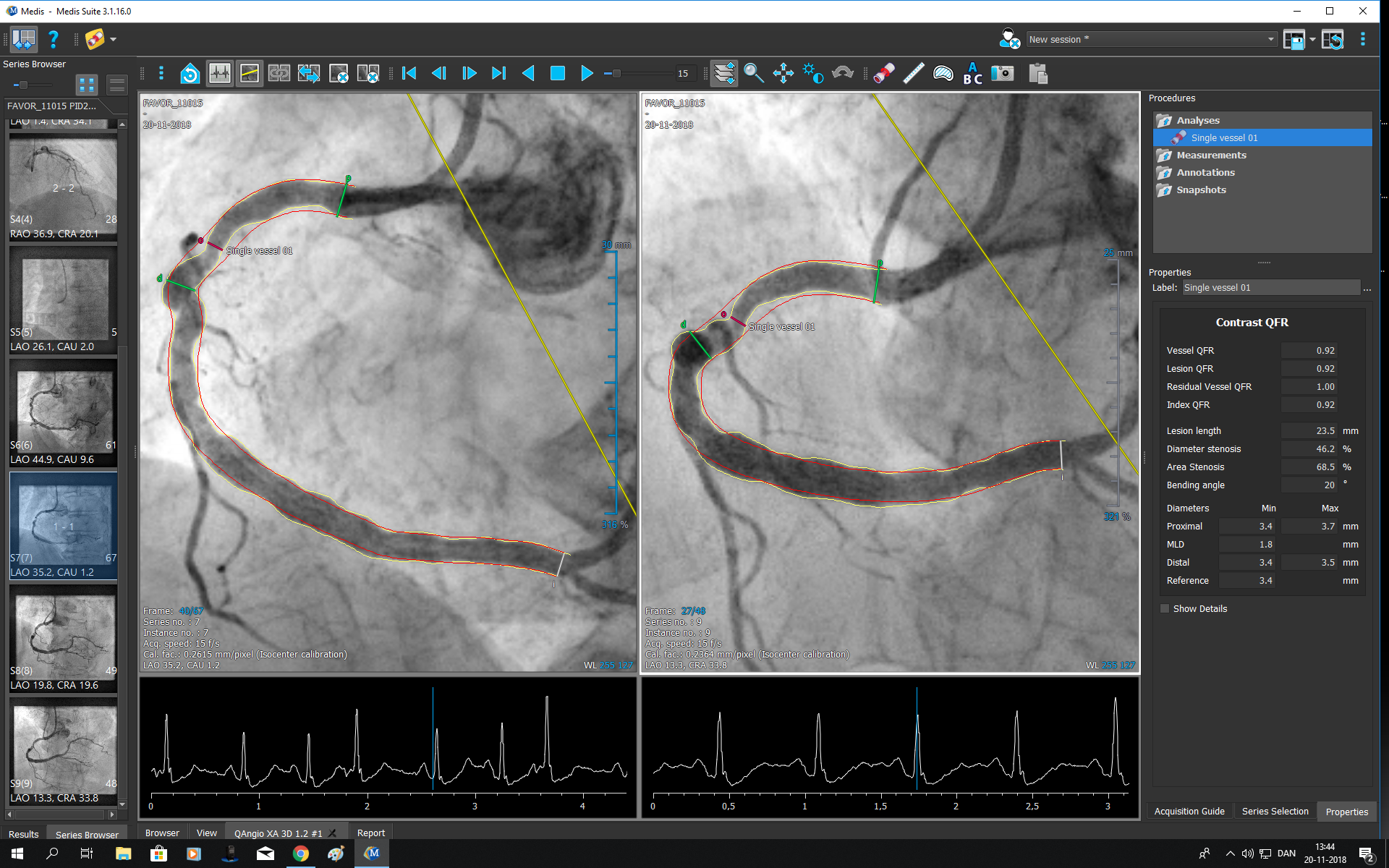
Image analysis
With over 10 years experience and > 50.000 cases analysed, CoroScience specializes in image analysis of angiograms, OCT, QCU, QCA, FFR and IVUS. Imaging technologies is an ever-evolving field, and we pride ourselves of being at the forefront of testing and adopting new technologies.
Online platform
CoroScience have developed an all encompassing online datamanagement and eCRF platform, providing clients a secure and user-friendly overview of trial/task progress, sites, documents and participants.
Assurance
Our Core Lab is validated to meet complience with the latest regulatory and industry standards. All data are handled in accordance to GDPR regulatives and are safely kept at Aarhus University servers.
OCT Analysis
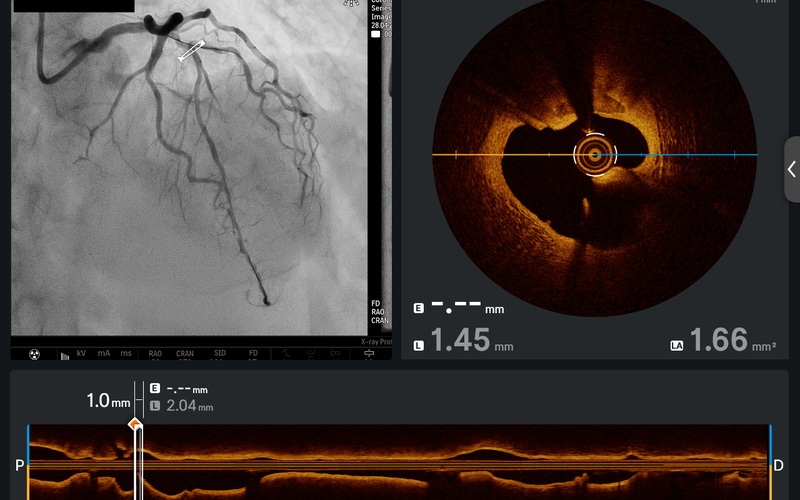
Optical Coherence Tomography (OCT) is a high-resolution, intravascular imaging modality that uses near-infrared light to visualize the coronary arteries. It enables a near-histology assessment of plaque morphology, lesion characteristics, and stent evaluation.
Guideline recommendations
The European Society of Cardiology (ESC) guidelines on myocardial revascularization recommend the use of intracoronary imaging, including OCT or IVUS, to optimize PCI outcomes (Class IIa). OCT may also be considered for detailed lesion assessment and stent evaluation in complex cases (Class IIb).
Services
We offer QCU (Quantitative Coronary Analysis) of OCT runs as a trial service. Our team provides standardized, high-quality analysis of OCT datasets, delivering measurements of lumen dimensions, lesion characteristics, and stent parameters.
QCA Analysis
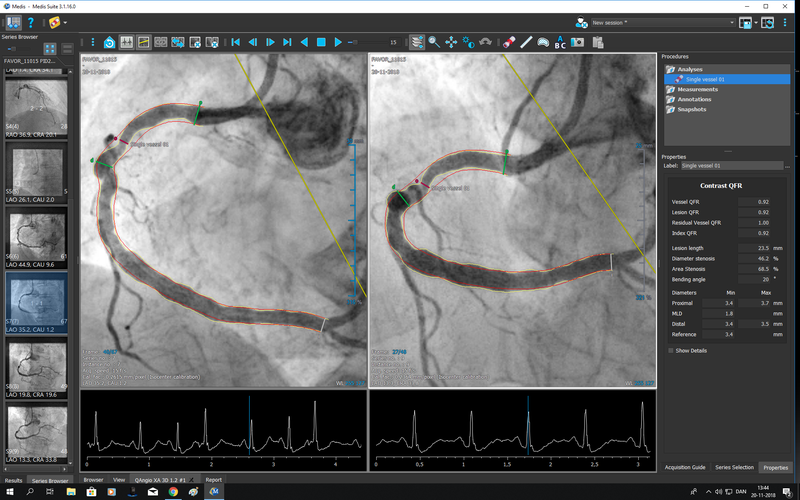
Quantitative Flow Ratio (QFR) provides a fast, wire-free, semi-automatic assessment of coronary physiology. Using standard angiographic images, and advanced computational modeling, QFR analyses help guide revascularization decisions without the need for hyperemia or pressure wires, reducing cost and procedural time.
We offer a highly qualified team capable of performing QFR analyses that suit your needs, as well as providing counselling on protocol development and interpretation of results. Our streamlined processes support both clinical practice and large-scale research studies with consistent turnaround times and detailed reporting.